Digital Measurement Amplifier DMX – fast and convenient commissioning via app

  • Digital measurement amplifier (1-/2-channel)
  • Fast and easy commissioning
  • App cockpit for commissioning and process analysis
  • Easy data recording / evaluation
  • 24-bit converter for highest precision
  • Very short cycle time (0.5 ms) for time-critical applications

Precise force measurement for dynamic industrial processes

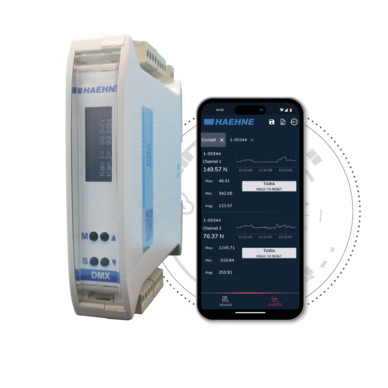
The DMX is a digital 1- or 2-channel measurement amplifier for strain gauge-based force sensors, developed for highly dynamic applications in industrial production.

With a 24-bit A/D converter, 0.5 ms cycle time, app-supported commissioning and flexible analogue outputs, the DMX sets new standards in precision and ease of use.


DMX product description (PDF download)


Do You Have Questions?

Contact us!


Significantly reduced commissioning times

App-supported parameterization via Bluetooth

The DMX can be:

  • Parameterized via device control buttons
  • Or conveniently via Bluetooth using the HAEHNE app

App functions:

  • Guided commissioning

Economic benefits:

  • Reduced commissioning time
  • Simplified calibration
  • Faster troubleshooting
  • Fewer service calls
  • Transparent process data
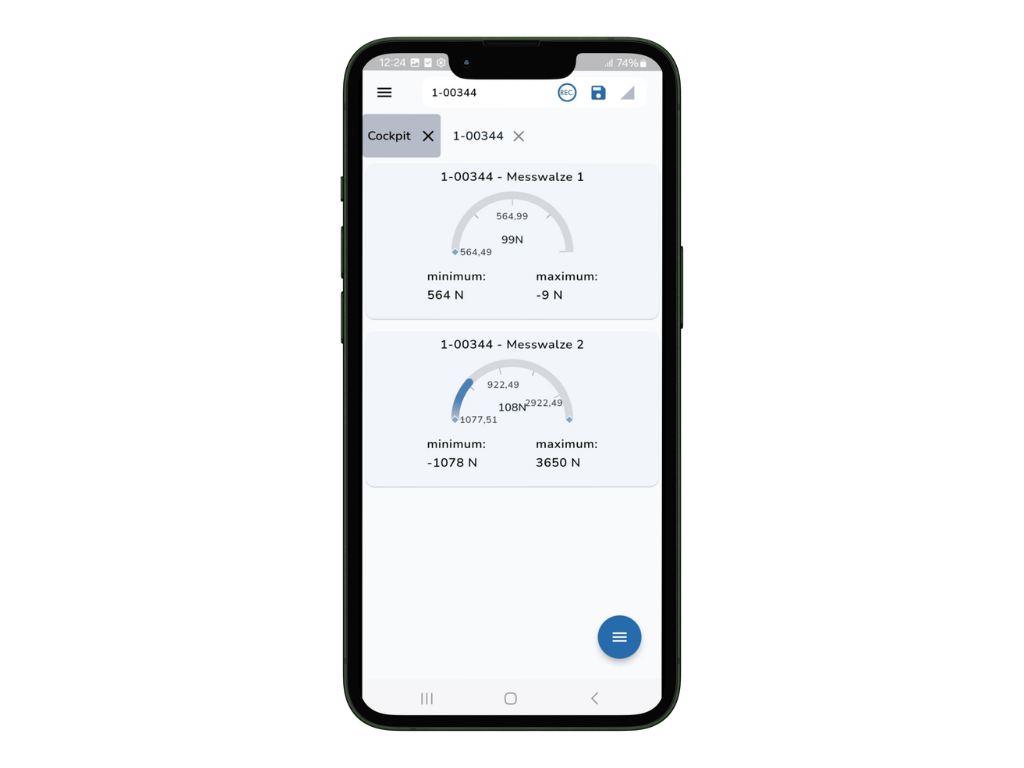
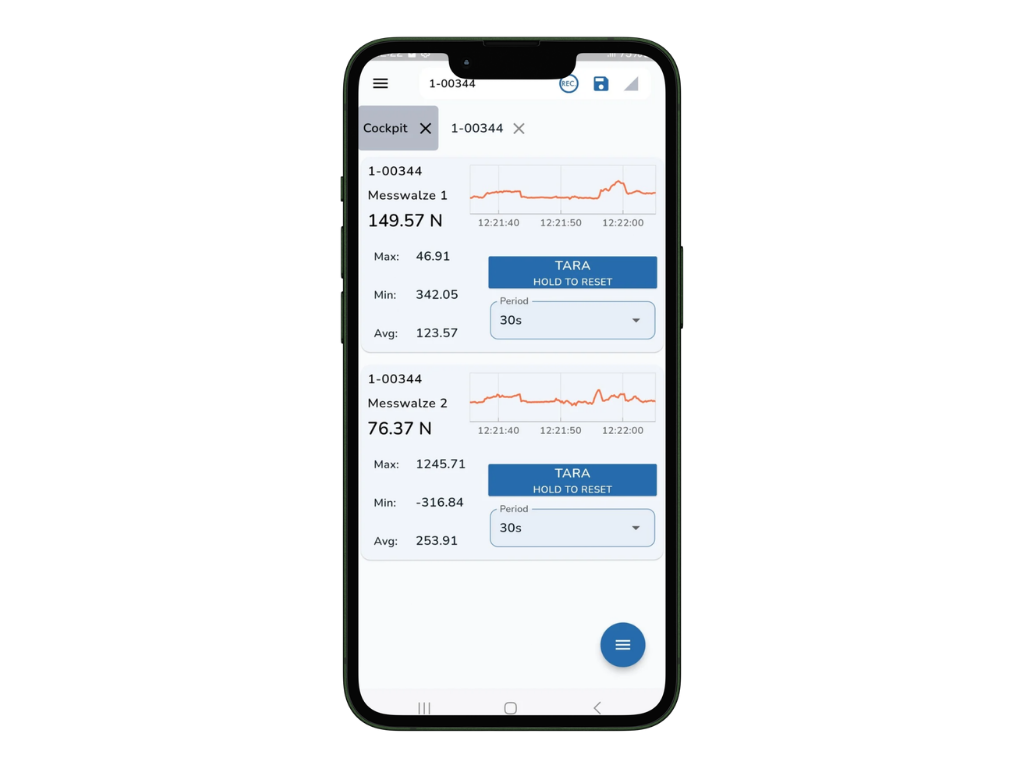
  • Live measurement value display
  • Cockpit function for process analysis
  • 2-channel recording
  • CSV export

Extremely fast response time – 0.5 ms cycle time

With a minimum signal processing time of 0.5 ms, the DMX is suitable for:

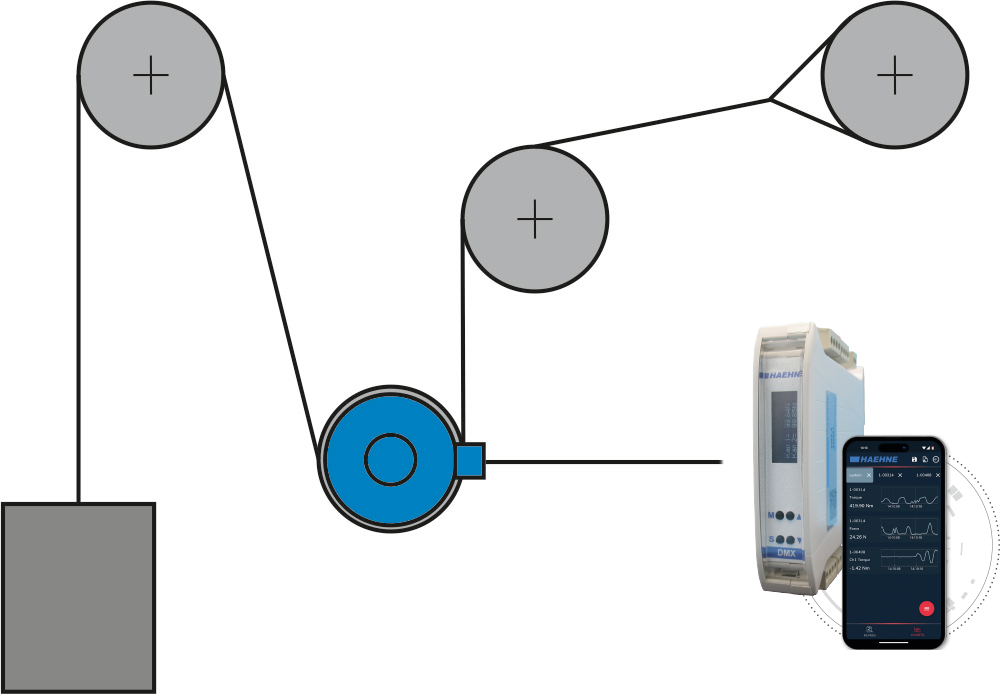
  • Web tension measurement
  • Wire tension measurement
  • Paper and film production
  • Highly dynamic web processing
  • Fast winding processes
  • Forming technology
  • Test benches

Key technical data (excerpt)

ParameterValue
A/D converter24 bit
Cycle time0.5 ms
Gain500–8000 V/V
Strain gauge supply5 V
Voltage output±10 V / 0…10 V
Current output4…20 mA / 0…20 mA
Supply24 V DC
Temperature range0–60 °C


Do You Have Questions?

Contact us!

Why conventional measurement amplifiers are no longer sufficient today

Requirements are increasing in modern production environments:

  • Higher web speeds
  • Faster control loops
  • Minimal tolerances
  • Less downtime
  • Higher quality requirements

Conventional amplifiers reach their limits here:

  • Insufficient resolution
  • Signal processing too slow
  • Complex commissioning
  • Lack of process transparency

The result:
Control instabilities, scrap, unnecessary downtime.

The solution: DMX – digital measurement amplifier with system intelligence

Maximum precision through 24-bit signal processing

The integrated 24-bit A/D converter enables exceptionally fine resolution even of the smallest force changes.

Your benefits:

  • More stable control loops
  • Consistent product quality
  • Reduced material scrap

FAQ

1. Which sensors is the DMX suitable for?

The DMX is designed for full-bridge resistive sensors, in particular:

  • Strain gauge load cells
  • Web and strip tension sensors
  • Wire tension sensors

It provides a strain gauge supply of 5 V (max. 60 mA).

2. Which output signals are available?

The DMX offers flexible analogue outputs:

  • ±10 V or 0…10 V
  • 4…20 mA or 0…20 mA

This allows direct integration into existing PLC systems.

3. How fast does the DMX process signals?

The minimum cycle time is 0.5 ms.

4. What are the benefits of the 24-bit resolution?

The 24-bit A/D conversion enables:

  • Finer signal resolution
  • More stable control loops
  • Reduced fluctuations
  • Lower scrap rates

Especially with sensitive materials, this measurably improves process quality.

5. How is commissioning carried out?

Parameterization is carried out:

  • Directly via device buttons
  • Or conveniently via Bluetooth using the HAEHNE app

The app enables live display, 2-channel recording, and CSV export.

6. Is the DMX retrofit-capable?

Yes.

Thanks to the standardized analogue outputs and 24 V DC supply (9–36 V), the DMX can directly replace existing amplifiers in many systems – without any control system modifications.

7. Is there a 2-channel version?

Yes, the DMX is available as a 1- or 2-channel version.

8. How quickly does the DMX pay for itself?

That depends on your application.

Typical savings result from:

  • Less scrap
  • Faster commissioning
  • Lower service costs
  • More stable production

Even small improvements in control stability can quickly offset the device cost.